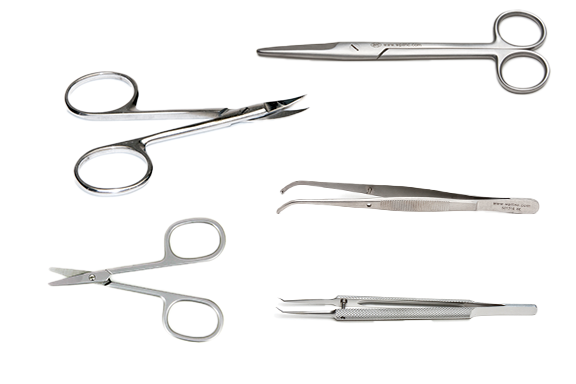
The Critical Importance of Cleaning Your Surgical Instruments
Tips for Manually Cleaning Tools Prior to Sterilization
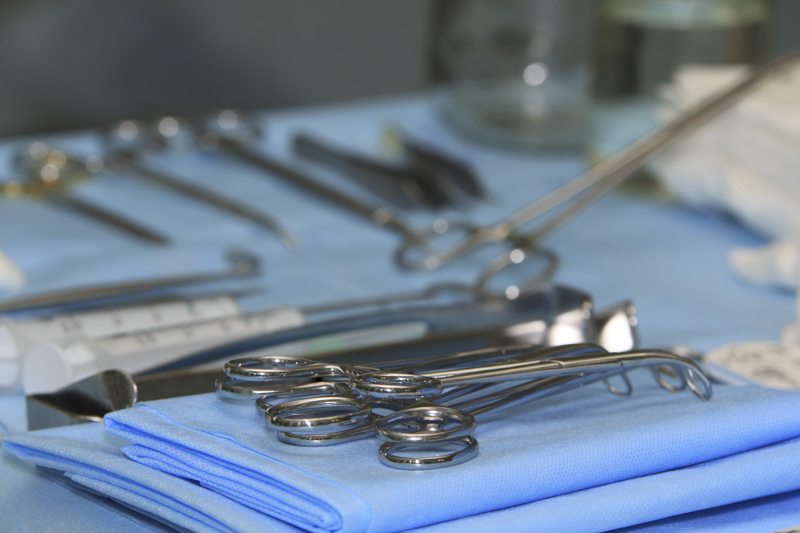 The proper care and handling of surgical instruments is the simplest way to protect your investment and add years to the life of your instruments. Here are the basic steps for proper surgical instrument cleaning.
When you are cleaning instruments manually, here a few quick tips:
- Use stiff plastic cleaning brushes.
- Do NOT use steel wool or wire brushes.
- Use only neutral pH detergents.
Take special care when you are rinsing your instruments. Here's a note of caution:
- If not rinsed properly, low pH detergents may breakdown the stainless protective surface and cause black staining.
- High pH detergents may cause surface deposits of brown stains, which can interfere with the smooth operation of the instrument.
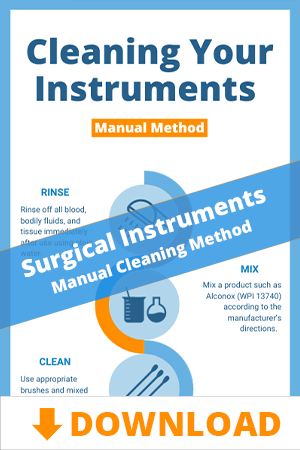
 |
RINSERinse off all blood, bodily fluids, and tissue immediately after use using plain water. |
 |
MIXMix a product such as Alconox (WPI 13740) according to the manufacturer's directions. |
 |
CLEANUse appropriate brushes and mixed product to clean each surgical instrument. |
 |
INSPECTInspect all instrument surfaces to ensure they are visibly clean and free of stains and tissue. Inspect for proper function and condition. |
|
RINSERinse instruments thoroughly underwater. While rinsing, open and close scissors, hemostats, needle holders and other hinged instruments. |
 |
DRYDry instruments with a clean towel. This minimizes the risk of corrosion and formation of water spots. |
More Information
Learn more about surgical instruments with these resources.